In September 2014, NASA and the Library of Congress united researchers, antiquarians, logicians and scholars from around the globe for a two-day symposium – Preparing For Discovery – with the goal that they get prepared for the inexorable disclosure of extraterrestrial life.
Space expert, symposium coordinator and previous boss NASA history specialist, Steven J. Dick, told The Huffington Post:
"We're taking a gander at all situations about discovering life. On the off chance that you discover microorganisms, that is one thing. On the off chance that you discover insight, its an alternate. Also on the off chance that they impart, its something else, and relying upon what they say, its something else! The thought is not to hold up until we make a disclosure, yet to attempt and set up the general population for what the suggestions may be when such a revelation is made. I think the reason that NASA is supporting this is a result of all the late movement in the disclosure of exoplanets and the advances in astrobiology by and large. Individuals simply think of it as a great deal more probable now that we're going to discover something — presumably organisms first and possibly knowledge later. The main impetus behind this is from an exploratory perspective that it appears to be a great deal more probable now that we are going to discover life sooner or later".
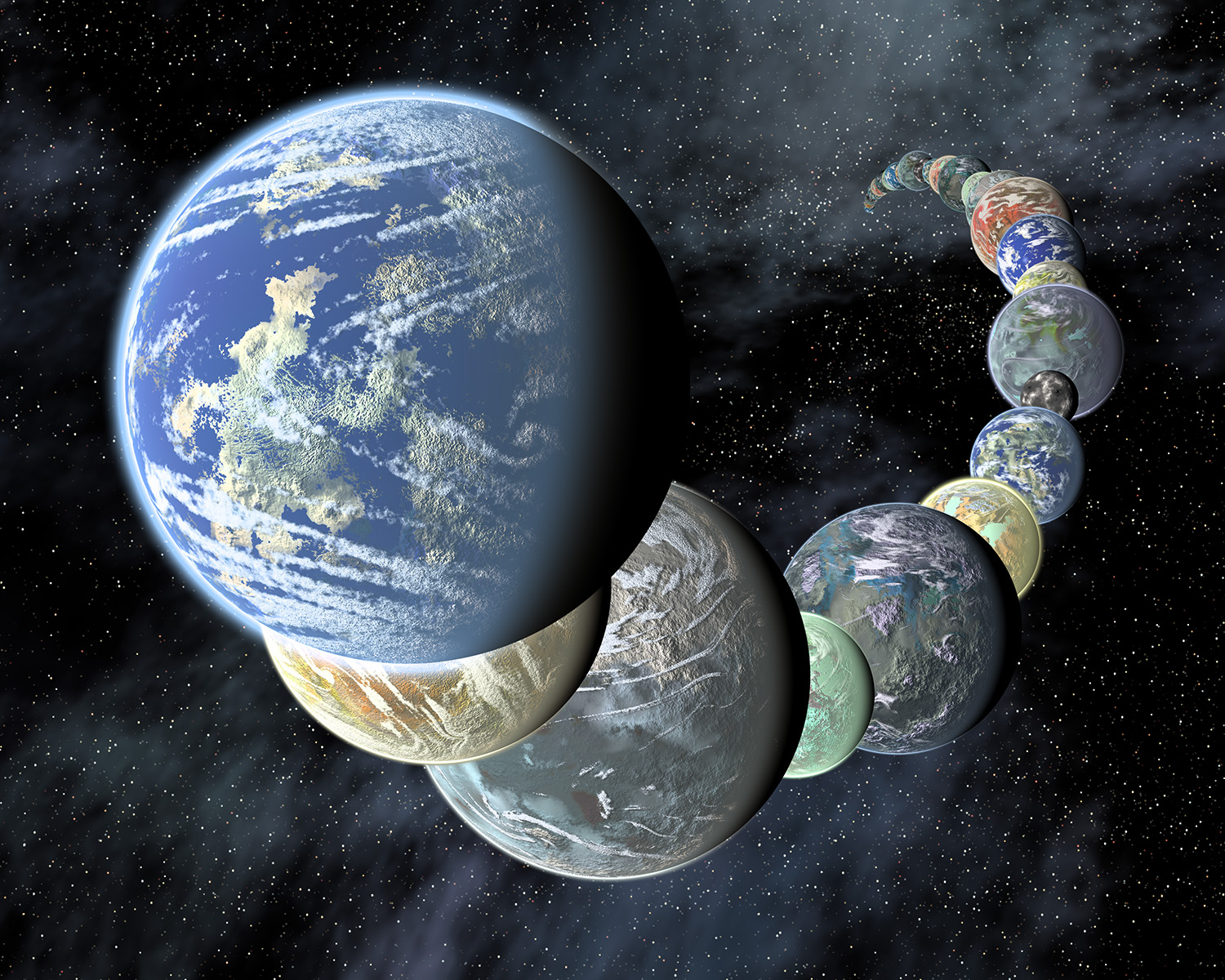
This current craftsman's idea represents the thought that rough, physical planets like the inward planets in our Solar System may be ample, and different, in the Universe.
At the symposium, Seth Shostak, senior stargazer at California's Search for Extraterrestrial Intelligence (SETI) Institute, imparted some bewildering numbers. "It's a major number: 10,000 billion, billion. What's more we realize that the vast majority of those stars have planets – 70 or 80 percent. On the off chance that those planets are sterile, and you're the main fascinating thing event in the universe, then you are a marvel. That future remarkable in the great. Thus, the widely appealing methodology is to say, 'You're not a supernatural occurrence, you're only one more duck consecutively of ducks'."
NASA's Mars Curiosity Rover found spikes of methane, a gas normally delivered by natural life, on the Red Planet – a first insight of outsider life in December 2014.
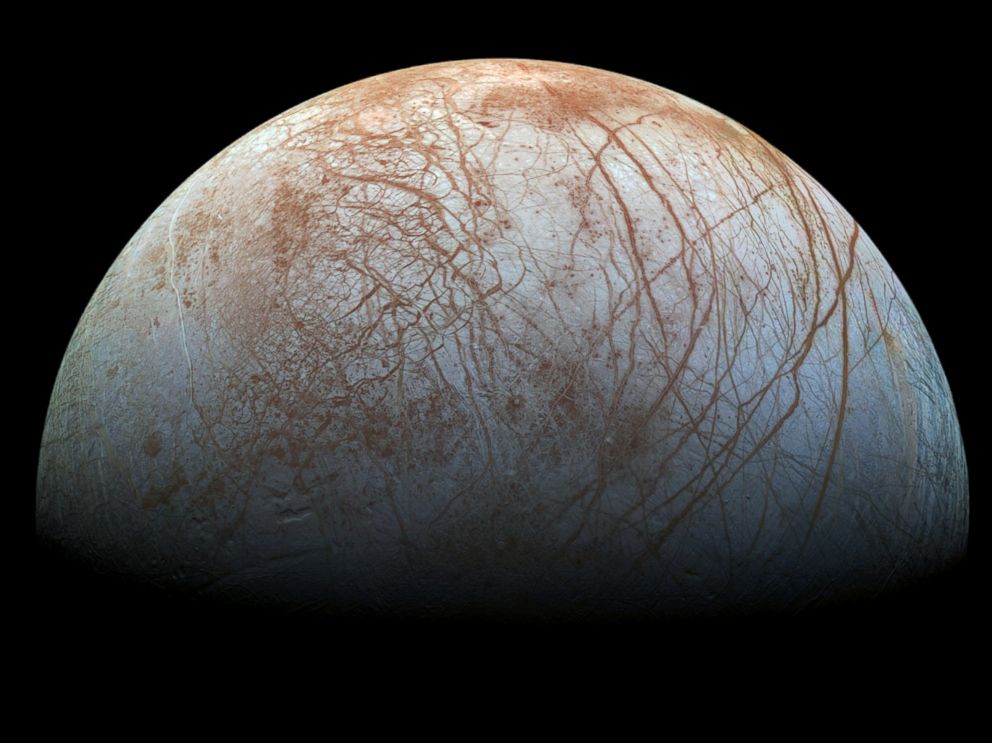
Presently, NASA has its sights determined to a visit to Jupiter's Europa, where there is a probability of discovering extraterrestrial life. Under its frigid shell, Europa has an inside sea that could be ten times deeper than those on Earth, and incorporate two to three times the volume of all fluid water on our planet. White House's $18.5 billion financial plan proposition incorporates $500 million for NASA in 2016 for adding to a mission to Jupiter's Europa, and its Asteroid Redirect Mission.
EUROPA
Since 2009, NASA's Kepler rocket has found more than 5,000 potential exoplanets, more than 1700 of which have been distinguished. The NASA guide will proceed with the dispatch of the Transiting Exoplanet Surveying Satellite (TESS) in 2017, the James Webb Space Telescope (Webb Telescope) in 2018, and the Wide Field Infrared Survey Telescope – Astrophysics Focused Telescope Assets (WFIRST-AFTA) ahead of schedule in the following decade. The revelation of extrasolar planets extends the potential for discovering tenable planets.
NASA doesn't need people in general to be astonished when extraterrestrial life is found. The span of the universe, the proof of UFOs, and millions asserting to have contact with extraterrestrial creatures, are conceivable pointers of life outside the Earth. Anyway wouldn't a contact with outsider life spell debacle for our planet? Cosmologist Stephen Hawking cautions that experience with outsiders could be disastrous for people. Simon Conway Morris, a transformative paleobiologist at Cambridge, accepts outsiders may be as rough and ravenous as people – or may be more regrettable.
References:
http://www.collective-evolution.com/2014/09/25/nasa-bring-researchers scholars together-to-get ready world-for-extraterrestrial-contact/
http://www.huffingtonpost.com/2014/09/22/nasa-astrobiology-outsider search

No comments:
Post a Comment